
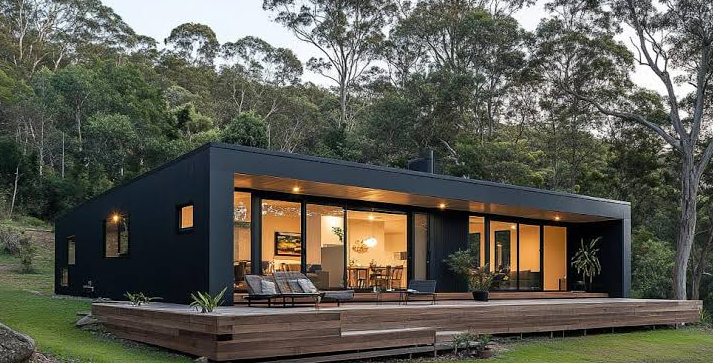
Find the best ADU companies in California for your Walnut Creek property. HBC Construction handles design, permits, and build from start to finish. Call today.
Your adult child needs a place to live but can’t afford Bay Area rents. Your aging parents want independence without leaving the neighborhood they’ve known for decades. Or maybe you’re staring at an empty garage and realizing it could be generating $2,500 a month in rental income. In Walnut Creek, these aren’t distant dreams — they’re projects that California law now actively encourages. Finding the best ADU companies in California means partnering with a team that understands both state regulations and the specific zoning quirks of Contra Costa County. At HBC Construction, we help Walnut Creek homeowners turn underused space into legal, income-producing accessory dwelling units without the permit nightmares that derail less experienced builders.
What an Accessory Dwelling Unit Actually Means for Your Property
An accessory dwelling unit is a self-contained residential space built on the same lot as your primary home. It has its own kitchen, bathroom, sleeping area, and separate entrance. ADU companies In Walnut Creek , ADUs can be attached to your main house, converted from existing space like a garage or basement, or built as a standalone structure in your backyard. The state mandates that local agencies must allow them on virtually all residential lots, with size minimums of 800 square feet and maximums reaching 1,200 square feet for detached units.
In Walnut Creek, we’ve noticed that most homeowners initially assume their lot is too small or their neighborhood too restrictive for an ADU. That was true a decade ago, but California’s 2026 regulations have stripped away most of those barriers. No minimum lot size requirements. No owner-occupancy mandates. Impact fees waived for units under 750 square feet. If your property is zoned for single-family residential use, you can almost certainly build one. The real question isn’t whether you’re allowed — it’s whether your builder understands how to design an accessory dwelling unit that passes Walnut Creek’s specific design review and fire safety requirements.
Working with clients in Walnut Creek, our team found that BART proximity changes everything about parking requirements. State law exempts ADUs within half a mile of public transit from providing additional parking. Many Walnut Creek properties near the Pleasant Hill or Walnut Creek BART stations qualify for this exemption, which frees up significant yard space and reduces project costs. Most generic ADU guides don’t mention this because they aren’t written by builders who actually work in Contra Costa County.
The Real Challenge in Walnut Creek, CA
The East Bay’s terrain and regulatory environment create ADU hurdles that flatland contractors never encounter. Walnut Creek sits at the base of Mount Diablo, which means many properties have sloped lots, hillside overlay districts, and drainage considerations that complicate foundation work. The city also enforces design standards for visible facades, requiring that Professional ADU companies in Walnut Creek exteriors complement the primary residence’s architectural character. Add California’s mandatory solar requirements for new detached ADUs, fire-resistant material rules for properties near wildland interfaces, and the 60-day state-mandated permit approval clock, and you have a project environment where one missed detail can cost months.
A client in Walnut Creek reached out when their ADU permit was denied after 45 days because their builder had submitted plans that violated the city’s hillside development overlay. The structure was positioned too close to a drainage swale, and the foundation design didn’t account for seasonal runoff from the slope above. We took over the project, redesigned the foundation with a stepped retaining wall system, rerouted drainage through a French drain network, and resubmitted. The permit was approved on the second review cycle, and the ADU was completed eight months later. The original builder had never even checked the overlay map.
Here is the objection most competitors never answer: homeowners worry that building an Affordable ADU companies in Walnut Creek means their property taxes will skyrocket and they’ll lose control of their backyard forever. The truth is that California law caps ADU reassessment at the value of the new construction only — your primary home’s tax basis stays unchanged. And you retain full ownership and control; the ADU is simply an additional structure on your lot, not a separate property that can be sold independently unless you specifically opt into condominium conversion, which requires additional legal steps.
How HBC Construction Approaches It Differently
Most ADU companies in California treat projects as a design-then-build sequence handled by separate teams. An architect draws plans, a permit expeditor submits them, and a contractor shows up months later to build what was designed. At HBC Construction, we operate as an integrated design-build firm where every phase is coordinated under one roof. This matters enormously in Walnut Creek, where the interplay between state ADU law, city design standards, hillside overlays, and utility capacity requirements demands constant communication.
We begin every project with a feasibility analysis that maps your lot’s buildable envelope, checks for overlay district restrictions, verifies sewer lateral capacity, and confirms electrical panel capacity for the additional load. Only after this assessment do we move to design. This prevents the costly redesigns that happen when architects draw beautiful plans that can’t actually be built on your specific property.
Our competitor gap insight: we integrate utility infrastructure assessment into every Walnut Creek ADU project. The East Bay’s aging sewer and water systems often lack capacity for additional units, and many homeowners discover this only after permits are approved and construction begins. Most ADU builders assume the city will handle utility connections or that existing service is sufficient. We verify lateral capacity with the Contra Costa Water District and East Bay Municipal Utility District before design starts, and we engineer solutions — from sewer line upgrades to separate meter installations — into the project budget from day one. This isn’t something you’ll find in generic ADU cost guides because it requires relationships with local utility providers and knowledge of their specific capacity constraints — and most California ADU companies simply don’t bother.
We also navigate the CalHFA ADU Grant Program for qualifying homeowners, which can provide up to $40,000 toward pre-development costs including architectural design, soil testing, and permits. Many builders don’t mention this because they don’t want to deal with the paperwork. We handle the grant application as part of our service.
Practical Tips: What to Know Before You Decide
If you are considering an ADU on your Walnut Creek property, here are the facts that actually matter:
- Check your overlay districts first. Walnut Creek has hillside, wildland fire, and historic overlay zones that impose additional requirements. A standard ADU design may need fire-resistant materials, enhanced defensible space, or architectural review. Any builder who doesn’t mention overlays during the first meeting hasn’t done their homework.
- Verify utility capacity early. Your existing sewer lateral and electrical panel may not support an additional dwelling. Upgrading a 100-amp panel to 200 amps or replacing an aging clay sewer line adds cost but prevents mid-project shutdowns. We always test capacity before quoting.
- Plan for solar from the start. New detached ADUs in California must include solar systems. This adds $8,000 to $15,000 to the project but can be offset by federal tax credits and reduced operating costs. Attached ADUs and garage conversions are exempt, which is why many Walnut Creek homeowners choose conversion over new construction.
In Walnut Creek, CA, we’ve noticed that most homeowners who choose HBC Construction over cheaper alternatives do so after watching a neighbor’s budget ADU project stall for months. One customer told us they’d hired a contractor who quoted $85,000 for a detached unit, then hit them with $22,000 in change orders for utility upgrades and hillside foundation work that should have been identified upfront. Our all-inclusive pricing model prevents those surprises.
One local market-specific tip: if your home is in the Rancho San Miguel or Lakewood areas near the golf course, your property may sit on expansive clay soil that shifts seasonally. Ask us about pier-and-grade-beam foundation options instead of standard slab-on-grade. The upfront cost is higher, but it eliminates the cracking and settlement issues that plague slab foundations on Contra Costa clay.
Your Walnut Creek Property Has More Potential Than You Think
Don’t let an empty garage or underused backyard sit idle while housing costs climb. HBC Construction brings integrated design-build expertise to every ADU project in Walnut Creek, CA — from feasibility analysis and permit navigation to final inspection and move-in ready delivery. Whether you are housing family, generating rental income, or creating a home office that actually works, our team has the local knowledge and state-level regulatory expertise to make it happen without the delays and surprises that derail less prepared builders. Contact HBC Construction today for a free property assessment and discover why we are recognized among the best ADU companies in California for East Bay homeowners.
Frequently Asked Questions
How much does an ADU cost to build in Walnut Creek, CA?
A garage conversion typically runs $80,000 to $150,000. A new detached ADU ranges from $150,000 to $300,000 depending on size, finishes, and site conditions. We provide detailed, all-inclusive quotes after our feasibility analysis — no hidden utility upgrades or foundation surprises.
Will building an ADU trigger a massive property tax increase?
No. California law limits reassessment to the value of the new ADU construction only. Your primary residence keeps its existing tax basis. In most cases, the annual tax increase is modest and easily offset by rental income.
How do I know HBC Construction is legit and not just another ADU promoter?
We are fully licensed and insured in California, with a portfolio of completed Contra Costa County ADU projects you can visit. We provide written warranties, maintain active memberships with local builder associations, and connect you with real Walnut Creek references you can call directly.
How long does the ADU permit process take in Walnut Creek?
California law requires approval or denial within 60 days for complete applications. In practice, well-prepared submissions in Walnut Creek are approved in 6 to 10 weeks. Our integrated design-build process ensures plans are complete and compliant before submission, avoiding the revision cycles that delay most projects.
Can I convert my garage to an ADU without replacing the parking?
Yes. California law prohibits cities from requiring replacement parking when a garage is converted to an ADU. This is one of the most cost-effective paths to adding housing, and we specialize in garage conversion ADU designs that maximize space while meeting all code requirements.