
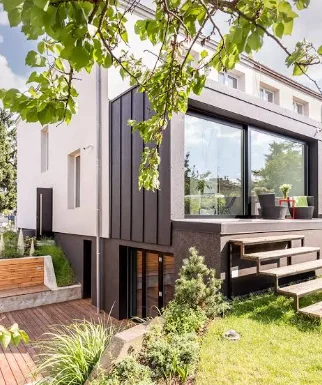
Expand your home with modern backyard ADU ideas in Palo Alto. HBC Construction builds smart spaces that add value. Schedule your consultation today.
Your backyard is sitting there, underused and full of potential, while your aging parents need a place to stay or your adult child moves back home. Maybe you work remotely and need a dedicated office, or you’re thinking about rental income to offset Palo Alto’s crushing mortgage costs. Accessory Dwelling Units have exploded in popularity across California, but most homeowners get stuck between Pinterest inspiration and the reality of permits, setbacks, and construction costs. Modern backyard ADU ideas in Palo Alto aren’t just about design trends; they’re about navigating one of the most regulated and expensive building environments in the country while creating a space that actually serves your family. HBC Construction has spent years helping homeowners across the Peninsula turn that potential into finished, permitted, livable space.
Affordable Modern Backyard ADU Ideas in Palo Alto: What You’re Actually Building
An ADU isn’t a fancy shed or a glorified guest room. It’s a complete secondary dwelling with its own foundation, framing, electrical service, plumbing, HVAC, and insulation meeting California’s Title 24 energy standards. Depending on your lot size and zoning, you might build a detached unit in the backyard, convert an existing garage, or add a junior ADU within your existing home’s footprint. Each option has different square footage limits, setback requirements, parking rules, and utility connection standards that vary by city and even by neighborhood.
In Palo Alto, we’ve noticed that most homeowners start their ADU journey with a design idea and a rough budget, then hit a wall when they discover what the city actually allows on their specific lot. Affordable backyard ADU ideas in Palo Alto from HBC Construction begin with a zoning analysis, not a blueprint. We pull your parcel map, check current zoning overlays, review any historic district restrictions, and identify utility access points before we ever talk about floor plans. That early homework prevents the heartbreak of designing a 600-square-foot studio only to learn your setback limits you to 450 square feet.
Working with clients in Palo Alto, our team found that the biggest surprise for most homeowners isn’t the construction cost; it’s the soft costs that pile up before a shovel hits dirt. Architectural plans, structural engineering, Title 24 energy calculations, soil reports, arborist assessments for protected trees, and permit fees can add $30,000 to $60,000 to your project before construction even begins. HBC Construction includes these costs in our initial projections so you’re not blindsided six months into planning. Transparency about the full financial picture is part of how we build trust from day one.
The Real Challenge in Palo Alto
Palo Alto’s building environment is among the most complex in California, and that’s saying something in a state known for regulation. The city has specific Trusted backyard ADU ideas in Palo Alto ordinances that overlay state law, creating additional requirements for design review, parking replacement, and tree preservation. Many lots fall within the Palo Alto Hills or Professorville historic districts, which trigger additional design review boards. The city’s tree ordinance protects heritage oaks and redwoods, meaning your ADU placement might be dictated by root protection zones rather than your preferred layout. And the cost of construction here runs 30 to 50 percent above the California average, driven by labor rates, material costs, and the sheer demand for skilled trades.
What competitors won’t tell you is that ADU permits in Palo Alto routinely take 12 to 18 months from application to approval, and that’s assuming no appeals or design review complications. Most contractors quote timelines based on construction alone, ignoring the planning and permitting phase that often takes longer than the build itself. They also won’t mention that some Residential backyard ADU ideas in Palo Alto designs trigger California’s Solar Mandate, requiring rooftop solar panels that add $15,000 to $25,000 to your project. These aren’t optional add-ons; they’re code requirements that can derail your budget if you don’t plan for them.
A client in Palo Alto reached out when they noticed their parents were struggling with stairs in their two-story home and needed a ground-level living option. They’d spent eight months working with an architect on a 750-square-foot detached ADU, only to learn at permit submission that their lot’s utility easement reduced the buildable area by 200 square feet and a heritage oak’s protected root zone blocked their preferred foundation location. HBC Construction stepped in, redesigned the unit to fit within the actual constraints, used a pier foundation system to avoid root damage, and got the project permitted within four months. The ADU is now their parents’ home, and the family is together on the same property. That experience is why we always start with constraints, not concepts.
How HBC Construction Approaches It Differently
Most ADU contractors in the Bay Area operate on a design-build model where they push you toward their preferred floor plans and materials, then subcontract everything to the lowest bidder. HBC Construction doesn’t work that way. We treat each ADU as a custom project because every lot in Palo Alto is different, and every family’s needs are specific.
Our process starts with a feasibility study: we analyze your parcel’s zoning, setbacks, utility access, tree protection zones, and any HOA or historic district restrictions. Only then do we move to design, working with architects and structural engineers who specialize in Palo Alto’s specific requirements. We coordinate with the city’s planning department early, attending pre-application meetings to identify potential issues before they become expensive problems. That front-loaded approach adds a few weeks to the start of your project but saves months of revisions and rejections later.
What sets HBC Construction apart in Palo Alto specifically is our deep familiarity with the city’s building department, its inspectors, and its unique requirements. We’ve worked on enough projects here to know which plan checkers focus on energy compliance details, which inspectors are particular about fire separation between ADUs and primary structures, and how to design around the city’s strict stormwater management requirements. We’ve built ADUs in Old Palo Alto, Professorville, and the Palo Alto Hills, each with different design review processes and neighborhood character guidelines. That local knowledge means fewer surprises, faster approvals, and projects that actually get built instead of dying in the permitting queue.
We also manage the full project lifecycle in-house rather than handing off to subcontractors who don’t know your project. Our project managers coordinate architects, engineers, utility companies, and city staff so you have a single point of contact from feasibility study through final inspection. That continuity matters when a question about electrical panel capacity arises during framing, or when the inspector notices a detail that wasn’t flagged during plan check. Someone who knows your project from the beginning can solve problems in minutes rather than days.
Practical Tips: What to Know Before You Decide
Before you commit to an ADU project, ask three questions that most homeowners never think to ask. First, what is your actual buildable footprint after setbacks, easements, and tree protection zones are applied? The number on your lot survey isn’t the number you can build on. Second, does your existing electrical panel have capacity for a separate dwelling meter, or will you need a service upgrade? Palo Alto’s grid requirements are specific, and upgrades can add significant cost and timeline. Third, what are the ongoing property tax implications? Adding an ADU triggers a reassessment that affects your tax bill, and renting it out has additional implications. Get clarity from a tax professional before you build.
In Palo Alto, we’ve noticed that most homeowners focus on the ADU’s interior layout and finishes while underestimating the importance of the connection between the unit and the main house. Privacy, noise separation, and shared outdoor space are what determine whether an ADU feels like a blessing or a burden. HBC Construction designs these transitions deliberately: separate entrances, sound-rated walls, strategic window placement, and landscaping that creates visual privacy without blocking light. These details don’t show up in square footage calculations, but they make the difference between a functional living arrangement and a strained one.
One local market-specific tip: if you live in one of Palo Alto’s Eichler neighborhoods or mid-century modern tracts, your ADU design may be subject to additional architectural review to ensure compatibility with the neighborhood’s historic character. This isn’t just about aesthetics; it’s about preserving property values and community identity. HBC Construction has experience designing ADUs that complement Eichler architecture — low-pitch roofs, exposed beams, floor-to-ceiling glass, and indoor-outdoor flow — while meeting modern energy and accessibility codes. It’s the kind of specialized knowledge that comes from working repeatedly in this specific market and understanding what Palo Alto values.
Your Next Step to a Backyard That Works for Your Family
An ADU is more than extra square footage; it’s a way to keep family close, generate rental income, or create the workspace you need without leaving the neighborhood you love. HBC Construction brings the local expertise, regulatory knowledge, and construction skill you need for modern backyard ADU ideas in Palo Alto that move from concept to completion. Whether you’re housing aging parents, launching a rental strategy, or building the home office you’ve been dreaming about, we’re here to help you make it real. Reach out today and let’s talk about what your backyard could become.
Frequently Asked Questions
How much does an ADU cost in Palo Alto?
Pricing depends on size, design complexity, and site conditions. For a typical detached ADU in Palo Alto, expect $350 to $500 per square foot all-in, including soft costs, permits, and construction. A 500-square-foot unit often runs $175,000 to $250,000 total. Garage conversions cost less; complex hillside sites cost more. HBC Construction provides detailed feasibility studies with realistic budgets before design begins.
How do I know HBC Construction is a company I can trust?
Check our local portfolio. We’ve completed ADU projects across Palo Alto and the Peninsula, and we encourage potential clients to visit finished units or speak with recent customers. We’re fully licensed, carry proper insurance, and our reviews come from real homeowners in this community who can speak to our process, communication, and the quality of our finished work.
How long does it take to build an ADU in Palo Alto?
Construction typically takes 6 to 9 months, but permitting adds another 12 to 18 months in Palo Alto. HBC Construction’s front-loaded feasibility and pre-application process helps streamline approvals, but we never promise unrealistic timelines. We provide a detailed schedule before work begins and keep you updated at every milestone.
Can I rent out my ADU in Palo Alto?
Yes, Palo Alto allows ADU rentals, but there are restrictions. Units built after January 2020 must be offered for terms longer than 30 days, and some neighborhoods have additional rental caps or HOA rules. HBC Construction advises on these regulations during our initial consultation so you understand your options before committing to the project.
Do I need a separate utility connection for my ADU?
It depends on your design and the city’s requirements. Some ADUs share water and sewer lines with the main house, while others require separate meters. Electrical typically needs a subpanel or separate service. HBC Construction evaluates your existing utilities during our feasibility study and includes all connection costs in our project scope, not as surprise add-ons later.
