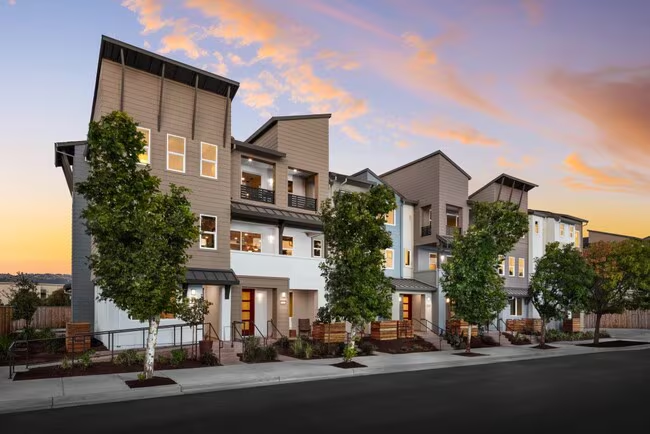
Build smarter with energy-efficient new construction homes in Morgan Hill. Learn Title 24 costs, solar requirements, and how to avoid budget surprises.
You have been saving for years, and you are finally ready to build a home that is actually yours. Not a resale with someone else’s compromises, but a house designed around how your family lives, with modern insulation, solar panels, and the kind of energy efficiency that keeps your utility bills manageable even when summer temperatures hit triple digits. The problem is that building in California is not simple, and Morgan Hill’s position in the Bay Area adds layers of cost, code, and complexity that most online guides gloss over. This is exactly why people search for energy-efficient new construction homes in Morgan Hill, and the reality is that the gap between what you want and what you can actually afford starts with understanding the rules. HBC Construction has built homes across Santa Clara County for years, and the most expensive mistake we see is homeowners who start designing before they understand what California requires.
What Energy-Efficient New Construction Actually Means in Morgan Hill
Energy-efficient new construction is the practice of designing and building homes that minimize energy consumption through superior insulation, high-performance windows, efficient HVAC systems, LED lighting, water-saving fixtures, and on-site renewable energy generation. In Morgan Hill, this is not optional. California’s Title 24, Part 6 Energy Code mandates specific efficiency standards for every new residential building, and the 2025 edition, which takes effect January 1, 2026, raises those requirements even higher. Morgan Hill has adopted the 2025 California codes, including the Energy Code and CALGreen standards, and enforces them through the Building Division at 17575 Peak Avenue.
In Morgan Hill, we have noticed that most homeowners assume energy efficiency is a checkbox feature they can add or remove based on budget. That assumption is wrong. Title 24 compliance is mandatory, and the path to compliance is either prescriptive, following a specific set of requirements for insulation, windows, and mechanical systems, or performance-based, using computer modeling to demonstrate that your design meets the energy budget. The performance path offers more design flexibility but requires a HERS Rater to verify compliance through field inspections and testing. Either way, you are building an efficient home whether you prioritize it or not.
For residential energy-efficient new construction homes in Morgan Hill, the appeal goes beyond code compliance. A properly designed efficient home in Climate Zone 4, which is Morgan Hill’s designation, uses less heating and cooling energy, maintains more consistent indoor temperatures, and qualifies for rebates and incentives from Silicon Valley Clean Energy, PG&E, and federal tax credits. Solar photovoltaic systems are mandatory for most new homes under Title 24, with size requirements based on the home’s conditioned floor area and climate zone. A typical 2,000-square-foot home in Morgan Hill needs roughly a 3.5 to 4.5 kilowatt system to meet the mandate, which adds $10,000 to $15,000 to the construction cost before incentives.
The Real Challenge Morgan Hill Homeowners Face
The hardest truth about building in Morgan Hill is that the Bay Area’s cost environment turns energy efficiency from a selling point into a significant budget driver. New construction in Morgan Hill carries a median listing price of $1,399,000, and the cost per square foot for mid-level semi-custom homes ranges from $400 to $550. Energy code compliance, solar mandates, CALGreen requirements, and seismic reinforcement all add cost that buyers in other states do not face. A HERS Rater inspection alone adds $1,500 to $3,000. Blower door testing for air leakage, duct blaster testing for HVAC efficiency, and verification of insulation installation quality are all required and all billable.
A client in Morgan Hill reached out when they noticed their construction budget had ballooned $85,000 over their original estimate before framing was even complete. The architect had designed a beautiful home with large west-facing windows and a complex roofline, but had not accounted for the fact that those windows required expensive low-SHGC glazing to meet Title 24, and the roof complexity made solar panel placement difficult and costly. The performance model failed initial review, requiring redesign of the window package and addition of extra insulation that was not in the original plan. The changes delayed the project by six weeks and added $12,000 in redesign and material costs. The architect was experienced in aesthetics but not in California energy code optimization.
Here is the objection most competitors ignore: what happens when your energy model fails plan check, and who pays for the redesign? Many builders in the Morgan Hill area use a design-bid-build model where the architect, engineer, and builder operate independently. If the energy model fails, the homeowner is caught between parties who blame each other while the meter runs on construction financing, carrying costs, and extended rental payments. The question competitors avoid is whether they guarantee Title 24 compliance in their contract or whether they leave you holding the bag when the HERS Rater fails the first inspection. Most will not discuss this because they do not integrate energy modeling into their design process and treat compliance as an afterthought.
How HBC Construction Approaches Energy-Efficient Building Differently
Most builders in the Morgan Hill area treat energy efficiency as a code requirement to be met, not a design opportunity to be optimized. They build to the minimum prescriptive path, install the required solar panels, and move on. HBC Construction integrates energy performance into the earliest design phases, using performance modeling software to test different envelope configurations, window placements, and HVAC strategies before any permits are submitted.
What sets this apart in Morgan Hill specifically is our understanding of the local climate, soil conditions, and the common design mistakes that drive up compliance costs unnecessarily. Morgan Hill sits in a valley with hot, dry summers and cool, wet winters. The afternoon sun from the west creates significant cooling loads, while winter temperature swings stress heating systems. We orient homes to minimize west-facing glass, specify appropriate overhangs for south-facing windows, and design roof planes that accommodate solar panels without awkward angles or shading conflicts. We also know that Morgan Hill’s clay-heavy soils expand and contract with moisture, which affects foundation design and the long-term performance of rigid insulation systems. Our foundations include proper drainage and insulation details that prevent thermal bridging and moisture intrusion.
For affordable energy-efficient new construction homes in Morgan Hill, we focus on value engineering that reduces cost without sacrificing performance. This means right-sizing HVAC systems rather than oversizing them, which is a common mistake that reduces efficiency and comfort. It means specifying fiberglass windows with thermally broken frames instead of expensive European imports that offer marginal performance gains. It means designing compact, efficient floor plans that reduce exterior surface area and associated heat loss. These decisions save tens of thousands of dollars while still exceeding Title 24 requirements.
Here is the insight generic articles never mention: the orientation of your garage relative to your living spaces affects your home’s energy performance more than most people realize, and almost no builder discusses this during sales. In Morgan Hill, a garage placed on the west side of the home acts as a thermal buffer, absorbing afternoon heat and protecting the living spaces from direct solar gain. A garage on the east side provides morning buffering but leaves the living spaces exposed to the hottest afternoon sun. The difference in cooling load can be 15 to 20 percent, which translates to smaller HVAC equipment, lower energy bills, and better comfort. We analyze solar paths and prevailing winds during site planning to position the home for passive performance, not just curb appeal.
Practical Tips: What to Know Before You Decide
Start by understanding that building in Morgan Hill requires compliance with the 2025 California Residential Code, the 2025 Energy Code, and the 2025 CALGreen standards. Fire sprinklers are mandatory for all new residential buildings in Morgan Hill. The city requires plan review that takes five to seven business days, with longer waits during peak season. Impact fees for schools, roads, and utilities can add $30,000 to $50,000 or more to your project before construction even begins. These are not hidden costs. They are standard requirements that should be in your budget from day one.
Working with clients in Morgan Hill, our team found that roughly half of homeowners do not understand the difference between a production builder and a custom builder, and they choose based on price without understanding what they are giving up. Production builders offer faster timelines and lower base prices but limit your choices to pre-designed plans and standard finishes. Custom builders offer complete design freedom but require more time, higher budgets, and active homeowner involvement. For energy-efficient new construction, a custom or semi-custom approach often yields better long-term performance because you can optimize the design for your specific site rather than accepting a plan that was drawn for a flat lot in a different climate.
Second, verify that your builder has experience with Title 24 performance path compliance and HERS Rater coordination. Ask for examples of recent projects that passed HERS inspections on the first attempt. Ask whether they provide a projected HERS score or energy use estimate before construction begins. A builder who cannot answer these questions is building to the minimum and hoping for the best, which is a risky proposition in California’s stringent regulatory environment.
One local market-specific tip: Morgan Hill’s water supply comes from the Llagas Subbasin and local reservoirs, and the city has implemented water conservation measures that affect landscaping and irrigation design. New homes must comply with water-efficient landscape ordinances that limit turf area and require smart irrigation controllers. If you are planning a large lawn or traditional garden, you will need to adjust your expectations or budget for alternative landscaping. Drought-tolerant native plants, permeable hardscaping, and rainwater harvesting systems are practical solutions that align with local regulations and reduce long-term water costs. This is a detail that separates builders who know Morgan Hill from those who treat every California city the same.
For professional energy-efficient new construction homes in Morgan Hill, look for builders who integrate energy modeling into design, have established relationships with certified HERS Raters, and can demonstrate a track record of first-pass compliance. The upfront investment in proper design pays dividends in lower utility bills, fewer construction delays, and a home that performs as promised.
Why Integrated Design Matters More Than the Lowest Square Foot Price
A new home is the largest investment most people make, and in Morgan Hill, that investment is measured in millions, not thousands. The difference between a home that meets code and one that truly performs is not about spending more. It is about spending smarter during the design phase, when decisions cost hundreds of dollars instead of thousands. new construction homes has built its reputation in Morgan Hill on optimizing energy performance before breaking ground, so our clients get homes that are comfortable, efficient, and compliant without the budget overruns that derail so many projects. If you are ready to stop renting and start building, the next step is a feasibility consultation that evaluates your site, your budget, and your goals before any design work begins.
FAQs
How much does it cost to build an energy-efficient home in Morgan Hill?
Energy-efficient new construction in Morgan Hill typically ranges from $400 to $550 per square foot for mid-level semi-custom homes, with high-end custom builds exceeding $600 per square foot. A 2,000-square-foot home costs $800,000 to $1,100,000 before land, soft costs, and finishes. Title 24 compliance, solar mandates, and CALGreen requirements add $25,000 to $50,000 compared to minimum-code construction.
Is solar mandatory for new homes in Morgan Hill?
Yes, California’s Title 24, Part 6 requires solar photovoltaic systems on most new residential buildings. The system size depends on your home’s conditioned floor area and climate zone. A typical Morgan Hill home needs a 3.5 to 4.5 kilowatt system, costing $10,000 to $15,000 before federal tax credits and local incentives. Battery storage is not mandatory but is increasingly popular for backup power during PG&E outages.
What is a HERS Rater, and why do I need one?
A HERS Rater is a certified third-party inspector who verifies that your home meets Title 24 energy efficiency requirements through field testing and visual inspection. They conduct blower door tests for air leakage, duct blaster tests for HVAC efficiency, and verify insulation installation quality. HERS Raters are required for all new homes in California using the performance compliance path, which offers more design flexibility than the prescriptive path.
How long does it take to build a new home in Morgan Hill?
From permit approval to final inspection, a typical new home takes eight to fourteen months depending on complexity, weather, and inspection scheduling. Custom homes with complex designs or high-end finishes can take eighteen months or more. Morgan Hill’s plan review takes five to seven business days, with longer waits during peak construction season.
How do I know if a builder is legitimate and experienced with energy-efficient construction?
Verify that the builder holds a California contractor license, carries general liability and workers compensation insurance, and can provide local references from recent energy-efficient new construction projects in Morgan Hill or Santa Clara County. Ask specifically about their Title 24 compliance process, HERS Rater relationships, and whether they provide energy performance projections before construction begins. Avoid builders who dismiss energy code requirements as unimportant or who cannot explain their compliance strategy in plain language.